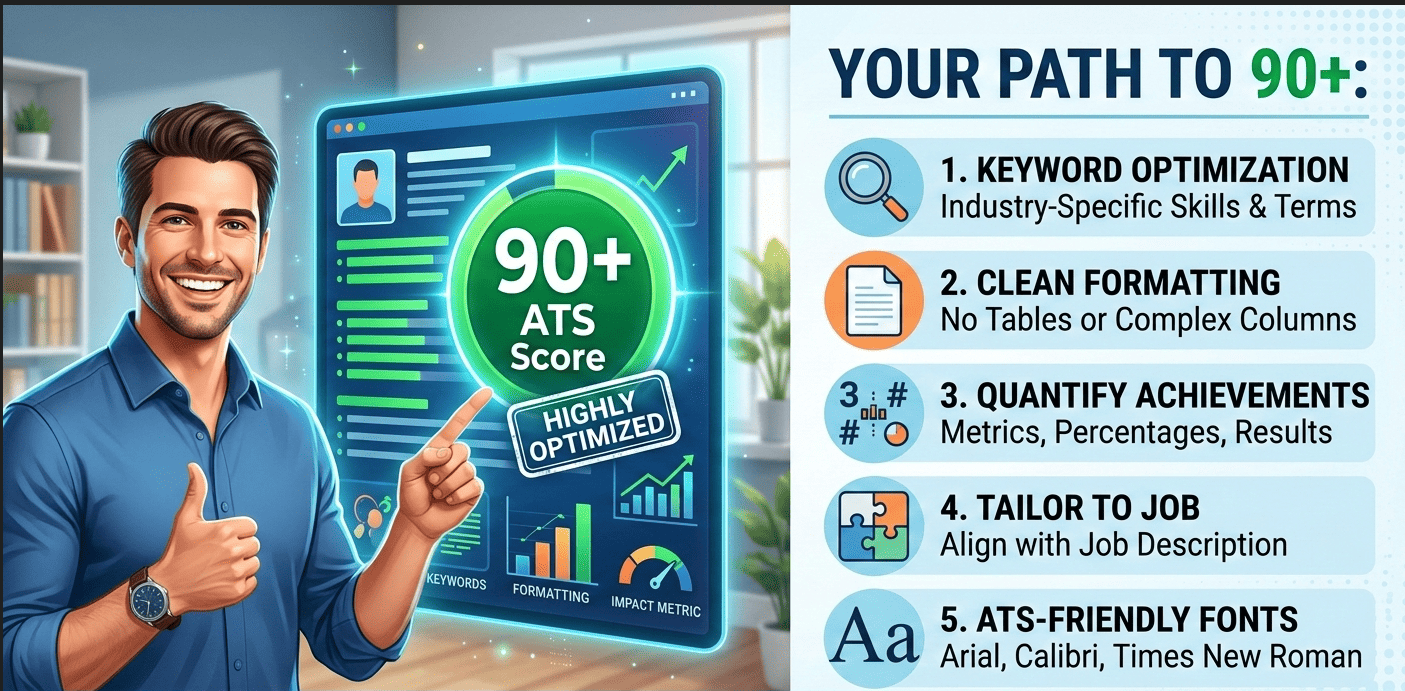
How I Finally Crossed 90+ ATS Resume Score (And How You Can Too)
I still remember the moment clearly. I had spent hours building what I thought was the perfect resume. Clean template, decent projects, good grades. I uploaded it into an ATS checker with full confidence.
Score: 42.
It felt like the system was judging my entire career in a single number. I refreshed the page thinking it was a mistake. It wasn’t.
That day I realised something painful but important: a good resume is not the same as a ATS-optimized resume. And if you’re applying for jobs today, passing the ATS filter is the first battle you must win. Over time, after countless edits, feedback from recruiters, and testing different formats, my resume finally started consistently scoring 90+ on ATS checkers.
Here’s what actually made the difference.
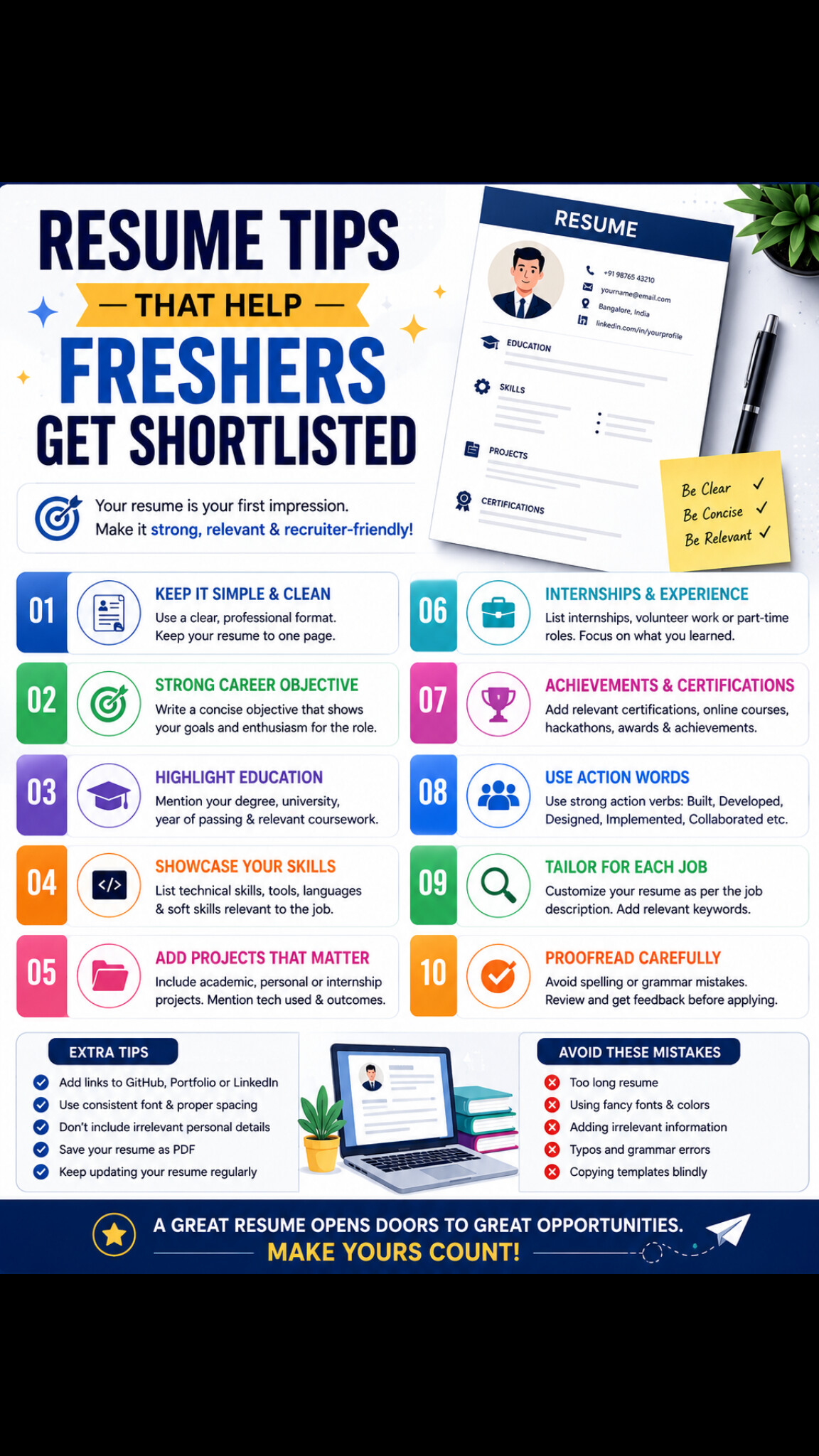
1. Start With Clarity, Not Decoration
One of the biggest mistakes people make is focusing on design instead of readability.
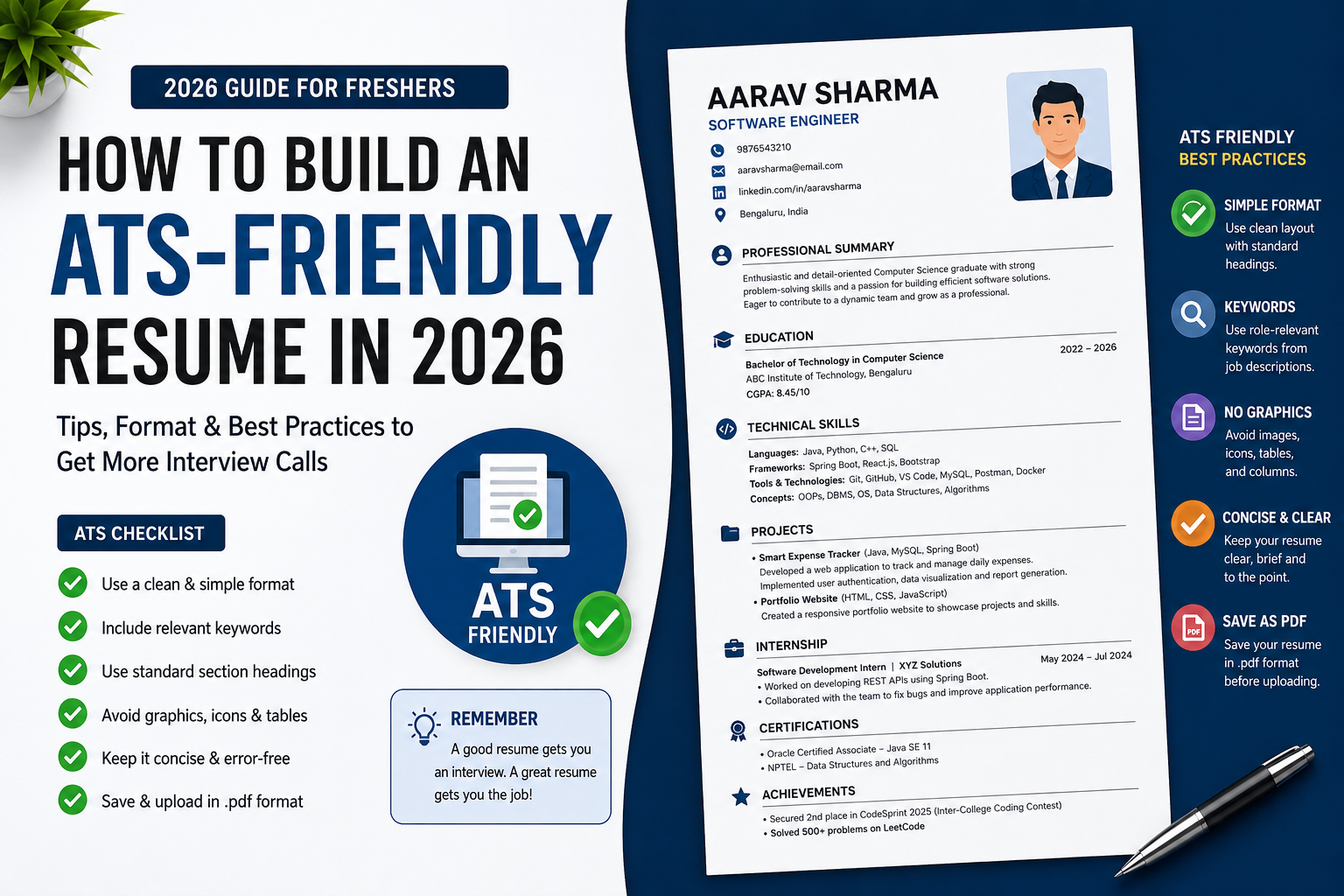
ATS systems are not impressed by fancy graphics, icons, or photos.
Instead, focus on:
- A simple resume template
- Clear headings
- Standard fonts
- No profile photo
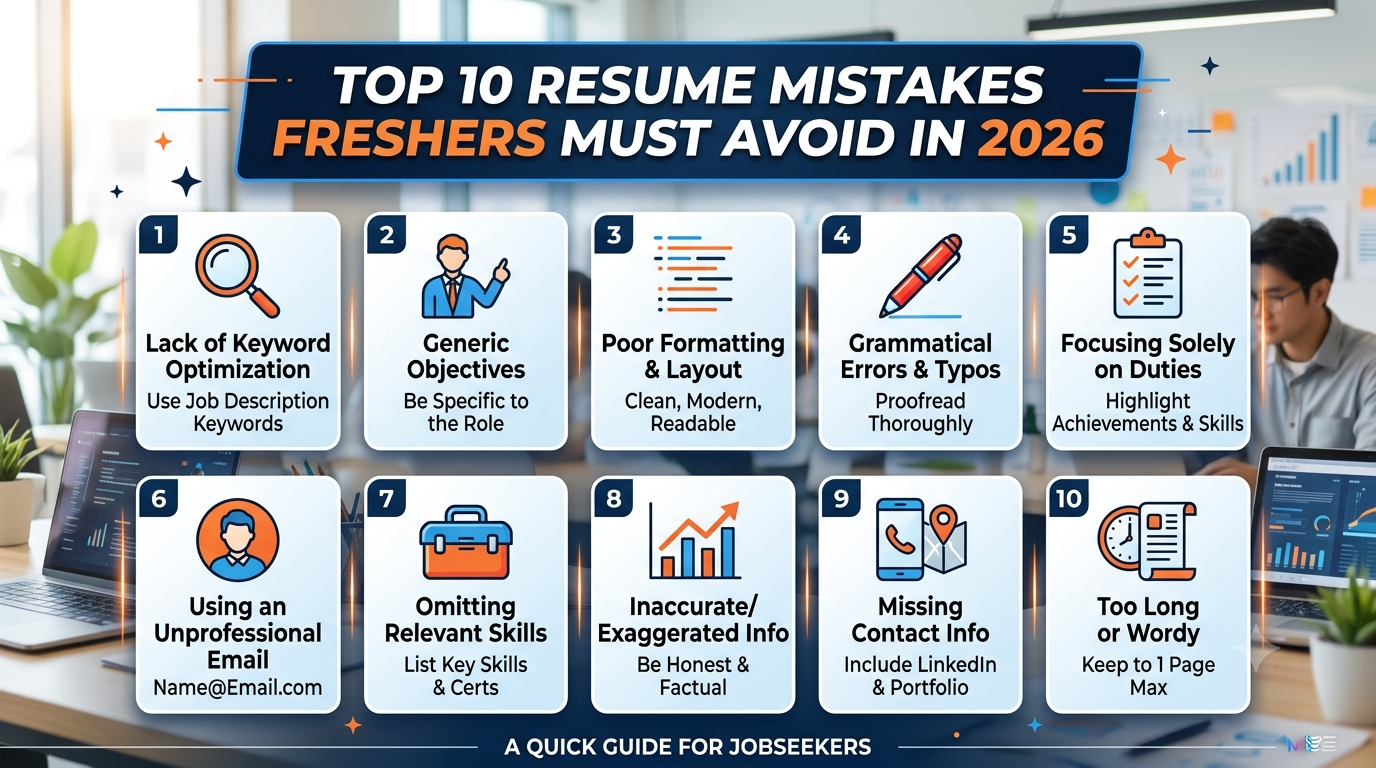
Your goal is simple: make it easy for both machines and humans to read. The ideal resume length is around 450–650 words. Anything longer risks losing attention.
2. Use Bullet Points That Show Impact
Recruiters skim resumes in seconds. Long paragraphs rarely get read. Aim for 12–20 bullet points across your experience and projects. But here’s the trick most people miss: Each bullet point should show action + outcome.
Instead of writing: Responsible for analyzing data
Write something stronger: Analyzed customer datasets and identified patterns that improved decision accuracy by 25%
Action words instantly make your experience sound confident and results-driven.
Some powerful verbs you can use include: Analyzed, Developed, Implemented, Created, Designed, Revamped, Conducted, Investigated, Streamlined, Transformed, Spearheaded, Accelerated, Achieved, Led, Launched, Improved.
Avoid repeating the same word again and again. Variety matters.
3. Numbers Make Your Resume Credible
If there is one rule that dramatically improves resume strength, it’s this: Quantify everything you can.
Instead of saying: Improved system performance
Say: Improved system performance by 35% by redesigning database queries
Numbers instantly add credibility. They tell recruiters the scale of your work.
Examples:
- Reduced processing time by 40%
- Increased engagement by 30%
- Processed 10,000+ records
- Led a team of 4 members
Even small projects become powerful when measured.
4. Structure Matters More Than You Think
ATS systems scan resumes in patterns. Keeping sections organised helps both machines and recruiters.
Your resume should ideally include:
- Education
- Experience / Internships
- Projects
- Skills
- Certifications
- (Optional: Summary)
Arrange achievements in reverse chronological order so recruiters can easily follow your journey.
And don’t underestimate the skills section. It is often one of the first areas ATS scans for keyword matching.
5. Show Your Work Beyond the Resume
A resume tells recruiters what you claim you can do. A portfolio proves it.
Add links to your:
- LinkedIn
- GitHub
- Portfolio website
- Coding profiles (for tech roles)
Even a simple project portfolio can instantly boost credibility.
If you're not a web developer, you can still create a portfolio using templates or no-code tools. What matters is showing your work.
Also include a footer with your name and email. It’s a small detail, but it adds professionalism.
Final Thought
Your resume is more than a document. It’s the story of what you’ve built, improved, solved, and achieved. When written well, it doesn’t just list tasks.
It demonstrates impact. The goal is not to impress an algorithm. The goal is to get past the algorithm so a human finally reads your story. And trust me, when your resume starts crossing 85–90 ATS score, that moment feels pretty satisfying. If you’re currently stuck at a low score, don’t worry. Mine started at 42. Sometimes all it takes is rewriting your story the right way.
How I Finally Crossed 90+ ATS Resume Score (And How You Can Too)
💼 Ready to Find Your Dream Job?
Browse verified fresher jobs and internships — updated daily.
Browse Latest Jobs →