Surviving the Algorithmic Gatekeeper
By 2026, the traditional "first-round HR call" has largely vanished, replaced by sophisticated AI-led interview platforms. Whether it is an asynchronous video interview (AVI) where a bot analyzes your facial expressions or an AI-proctored coding challenge that tracks your keystrokes in real-time, the first gatekeeper you meet in your career is likely to be made of code, not flesh and blood. To land a job at top-tier firms like Google, Meta, or high-growth startups, freshers must learn the art of "Algorithmic Charisma"—the ability to satisfy the machine's requirements while demonstrating the human depth needed for the next round.
The biggest challenge with AI proctors is their reliance on Pattern Recognition. These systems are trained on thousands of "successful" interviews, looking for specific markers of competency. The first step to beating the bot is Keyword Precision. In a 2026 technical interview, it is not enough to just write the code; you must vocalize your thoughts using high-value industry terms. If you are solving a sorting problem, explicitly mention "Time Complexity," "O(n log n) efficiency," and "In-place algorithms." The AI scanner is programmed to flag these specific technical anchors as signs of a "Senior Mindset."
Furthermore, AI proctors analyze Non-Verbal Metadata. Many modern platforms use "Sentiment Analysis" to determine your confidence levels. In 2026, "eye contact" means looking directly into the webcam lens, not the screen. Avoiding excessive filler words like "um" and "uh" is more critical than ever, as AI often interprets these as a lack of technical certainty. You aren't just being tested on your code; you are being tested on your "Communication Score," which the AI generates based on your vocal clarity and structural logic.
Finally, to score that elusive human meeting, you must treat the AI-proctored coding environment with extreme care. Modern bots track "Keystroke Dynamics." If you copy-paste large blocks of code or show a sudden, inhuman burst of typing speed, the AI will flag you for "Plagiarism or LLM-Assistance." The secret is to build your solution incrementally. Start with a comment outlining your logic, then write the code line-by-line. This "human-like" development pattern tells the AI that you are an original thinker, making it far more likely to recommend you for a final, face-to-face interview with a human hiring manager.
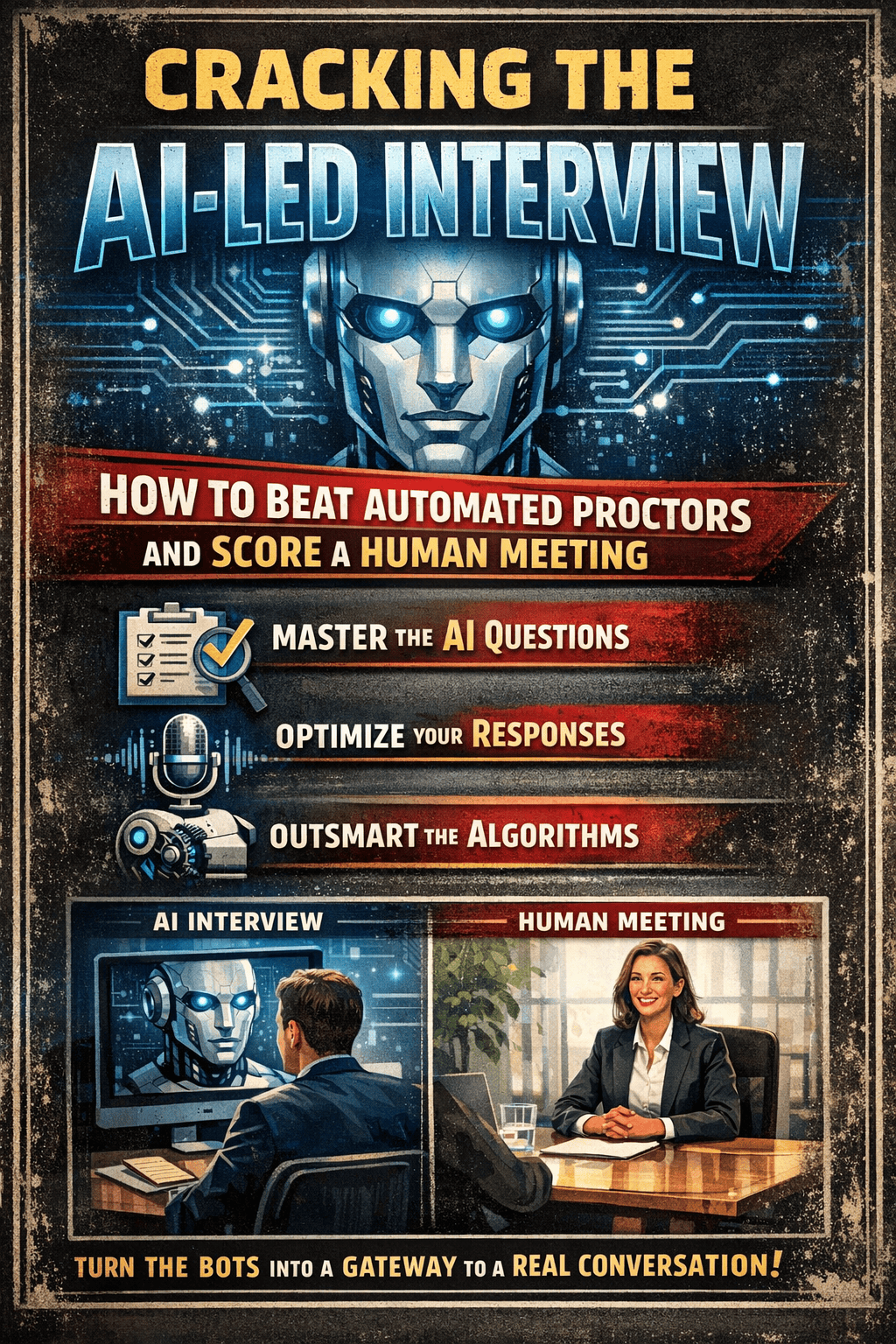
Cracking the AI-Led Interview: How to Beat Automated Proctors and Score a Human Meeting
💼 Ready to Find Your Dream Job?
Browse verified fresher jobs and internships — updated daily.
Browse Latest Jobs →