
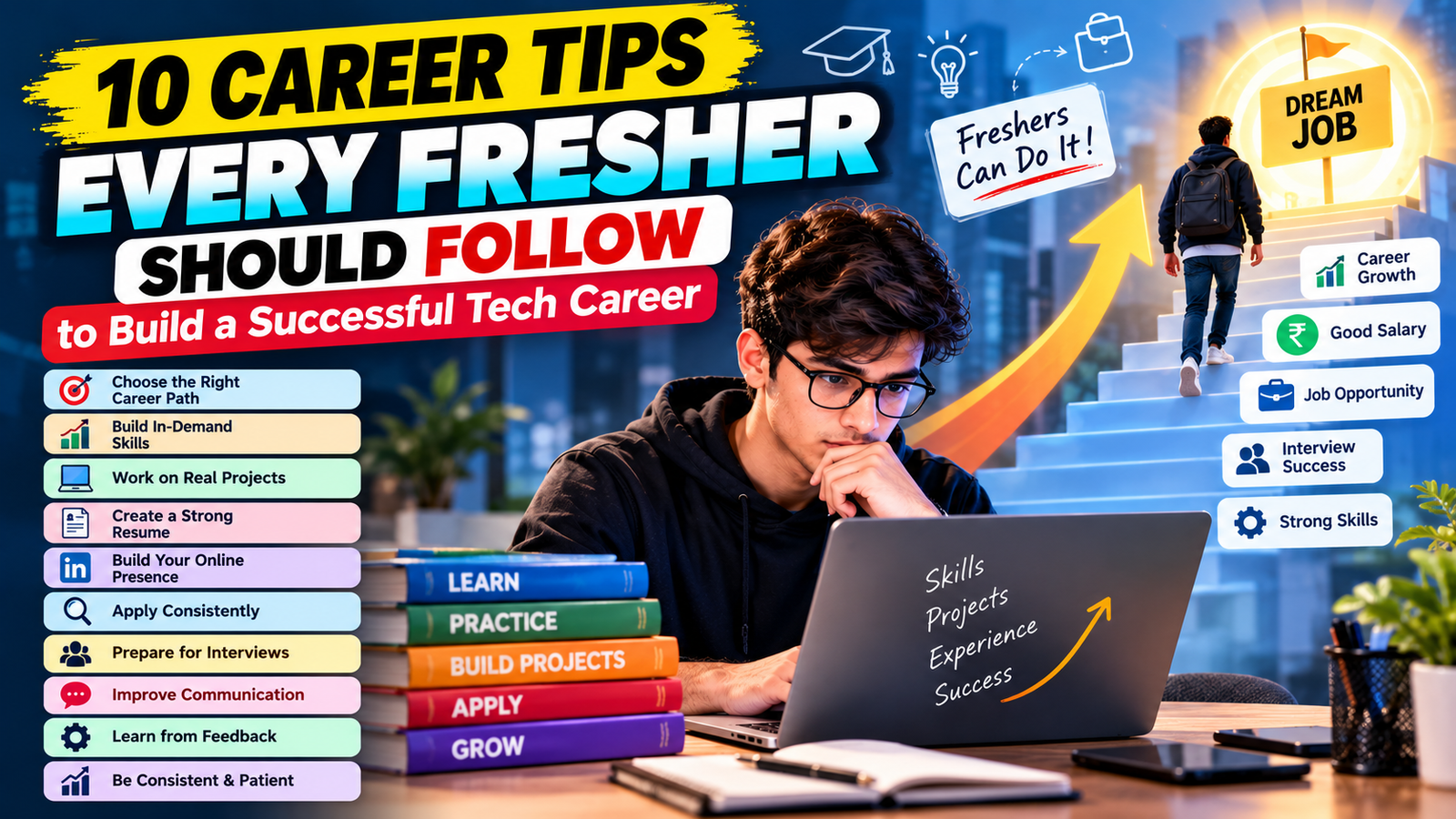
10 Career Tips Every Fresher Should Follow to Build a Successful Tech Career
Starting a career as a fresher can feel confusing. There are hundreds of technologies to learn, thousands of job openings to explore, and many different career paths available in the technology industry. Instead of trying to learn everything at once, fresh graduates should focus on building strong fundamentals, gaining practical experience, and developing a consistent career strategy.
Here are ten practical career tips that can help freshers build a strong foundation for their professional journey.
1. Choose a Clear Career Direction
The first step is to understand which type of role you want to pursue. Software development, frontend development, backend development, testing, data analytics, cloud computing, cybersecurity, and other fields require different skills.
You do not need to decide your entire career immediately, but having a short-term target can make your preparation more focused. For example, if you want to become a frontend developer, start by strengthening HTML, CSS, JavaScript, React, Git, and basic web development concepts.
2. Build Skills Instead of Collecting Certificates
Certificates can demonstrate that you completed a course, but practical skills are equally important during a job search.
Instead of completing many courses without applying the knowledge, choose a technology and build projects with it. A working project can help you understand real-world development and gives you something meaningful to discuss during interviews.
3. Create Projects That Solve Real Problems
Projects are an excellent way for freshers to demonstrate their technical knowledge. Try building applications that solve practical problems rather than creating only basic tutorial projects.
For example, you could build a task management application, job portal, e-commerce application, student management system, or expense tracker.
Document your projects properly and keep the source code organized on GitHub.
4. Keep Your Resume Simple and Relevant
A fresher resume should clearly communicate your education, technical skills, projects, internships, certifications, and relevant achievements.
Avoid adding every technology you have ever studied. Include skills that you can confidently explain in an interview. Whenever possible, describe projects using measurable or specific information instead of generic statements.
5. Build a Professional Online Presence
Your online presence can support your job search. Maintain an updated LinkedIn profile and GitHub account.
Your LinkedIn profile should clearly mention your target role, technical skills, projects, internships, and relevant achievements. On GitHub, keep important repositories organized with useful README files and clear project descriptions.
6. Apply Consistently
Many freshers make the mistake of waiting for the perfect job before applying. Job searching is a process, and rejection is a normal part of it.
Create a regular application routine. Look at company career pages, verified job platforms, campus opportunities, internships, referrals, and professional networks.
Keep track of the companies you applied to, the role, application date, assessment status, and interview status. This makes your job search more organized.
7. Prepare for Interviews Alongside Applications
Do not wait until you receive an interview call before starting preparation.
Revise programming fundamentals, data structures, SQL, object-oriented programming, operating-system basics, networking fundamentals, and technologies related to your target role.
Also prepare to explain every important project and internship mentioned on your resume.
8. Improve Communication Skills
Technical skills are important, but you also need to communicate your ideas clearly.
Practice introducing yourself, explaining your projects, discussing technical problems, and answering common HR questions. You do not need complicated English. Clear and confident communication is more useful than using difficult vocabulary.
9. Keep Learning From Feedback
If you are repeatedly getting rejected at a particular stage, identify what you can improve.
For example, if you are failing coding assessments, spend more time on problem-solving. If your resume is not generating interview calls, review its structure and relevance. If you are struggling during technical interviews, practice explaining concepts and projects.
Treat each interview as an opportunity to understand where your preparation needs improvement.
10. Be Consistent and Patient
Building a career takes time. You may not get your preferred role immediately after graduation, and your first job does not necessarily have to define your entire career.
Focus on improving your skills, gaining practical experience, building professional connections, and learning from each opportunity. Small improvements made consistently can create significant progress over time.
Conclusion
A successful career does not depend on learning every technology or applying to hundreds of jobs without a plan. Freshers can make their job search more effective by choosing a clear direction, developing practical skills, creating useful projects, maintaining a professional profile, preparing for interviews, and applying consistently.
The most important thing is to keep moving forward. Build one useful skill, complete one meaningful project, improve your resume, apply for relevant opportunities, and learn from every experience. With consistency and a structured approach, you can create a strong foundation for your technology career.
10 Career Tips Every Fresher Should Follow to Build a Successful Tech Career
💼 Ready to Find Your Dream Job?
Browse verified fresher jobs and internships — updated daily.
Browse Latest Jobs →